Collecting guides
Pokémon Card Values: Compare Raw and Graded Prices in Brickify
Use Brickify’s raw and graded Pokémon estimates correctly. Match the printing, condition and grade, and understand what a scanner can and cannot tell you.
Brickify shows available raw and graded Pokémon card value estimates. Raw prices refer to ungraded cards; graded prices depend on the exact printing, grading company and assigned grade. A graded estimate is not a prediction of the grade your card would receive.
What raw and graded actually mean
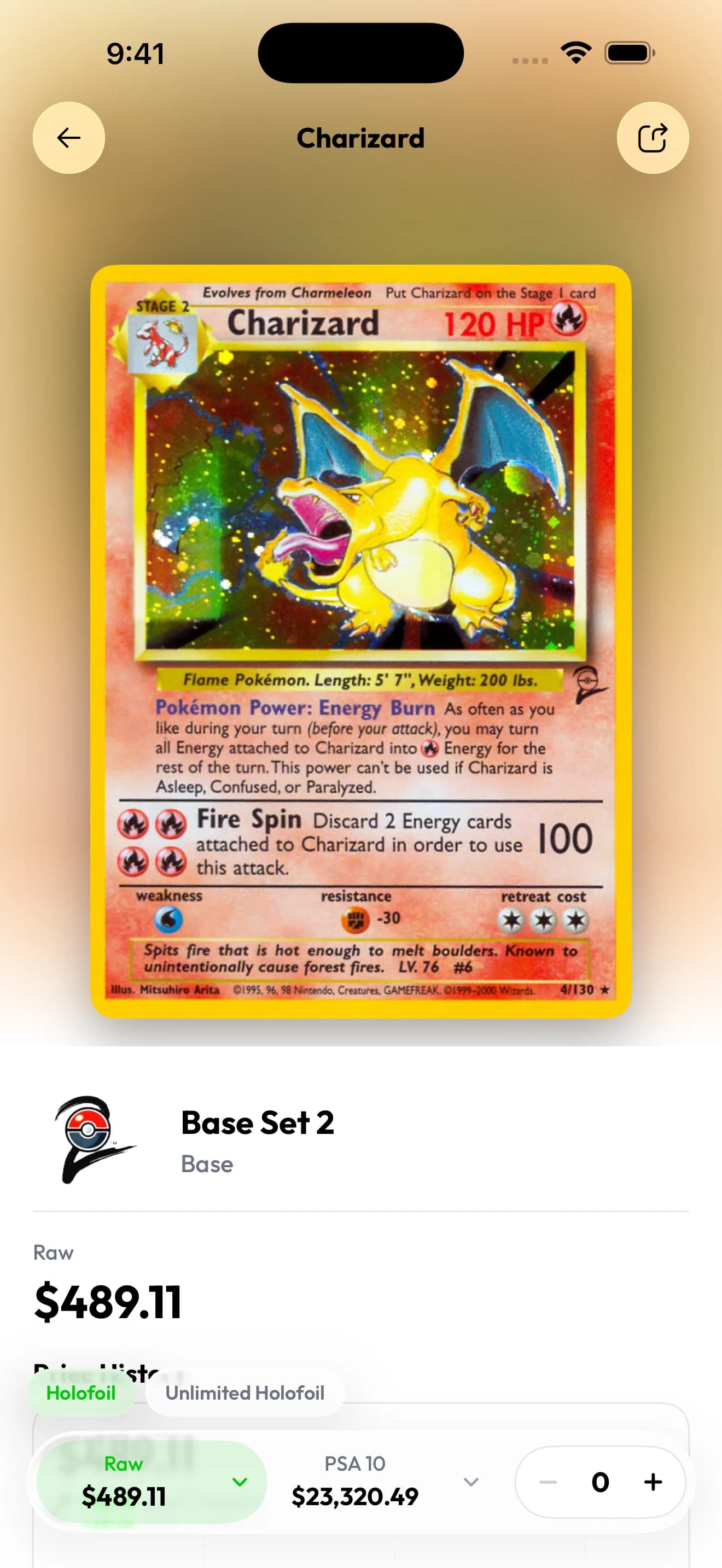
The same card page separates raw and graded estimates. Select the condition or grade that matches your copy; a PSA 10 estimate does not grade an ungraded card.
Captured in Brickify on iPhone 17 Pro Max. Displayed values are examples from the capture, not current quotes.View full-size screenshot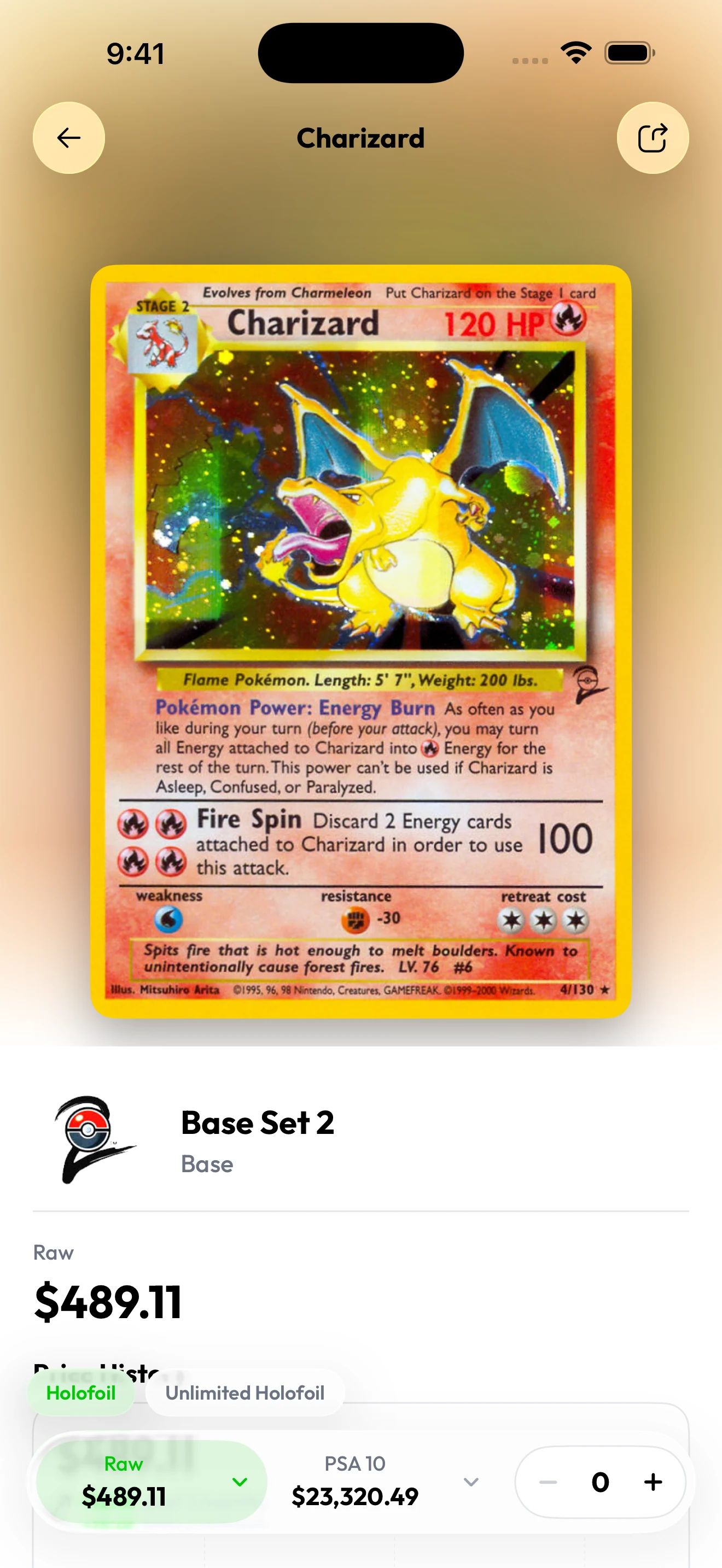
A raw card has not been encapsulated with a professional grade. Its condition still matters. A graded card carries a grading company’s assessment, so a useful comparison must match that company and grade as well as the card’s printing.
Grading does not automatically increase a card’s value by more than the cost of the service. Demand, condition and the resulting grade all affect the outcome. A low-grade copy and a high-grade copy of the same release can have very different markets.
Check the price basis before comparing
| Check | Why it changes the comparison |
|---|---|
| Exact printing | A promo, reprint or alternate version may have a different market. |
| Language and finish | Cards with the same character name can be distinct releases. |
| Raw condition | Wear affects how relevant another raw sale is. |
| Grading company and grade | A grade from one service is not automatically interchangeable with another. |
| Sale context | Timing, listing details and bundled items can affect a comparable sale. |
Use graded prices as scenarios
If you own a raw card, treat the available graded estimates as scenarios. Look at more than the highest grade, and consider an outcome lower than the one you hope for. The camera cannot examine every feature a grader evaluates.
PSA’s standards assess physical details including centering, corners, edges and surface. Its number scale is not a direct translation of informal terms such as lightly played. Consult the grading service’s own standards rather than assigning a professional grade from a seller’s condition label.
An illustrative grading-cost check
Suppose a raw sale might bring $80 and a graded scenario might bring $120. If grading and related shipping cost $35, only $5 separates those scenarios before any differences in selling fees. If the resulting grade brings $70 instead, the outcome is materially worse. These are invented example amounts, not current market prices or service fees.
Use actual quotes for fees and relevant sales for your card. The purpose of the calculation is to reveal how sensitive the decision is to the outcome, not to predict a guaranteed profit.
Use the comparison in Brickify
- Scan your card and verify its exact printing.
- Review the raw estimate and available graded estimates separately.
- For a slab, check the physical label and compare like with like.
- For a raw card, inspect the front and back and keep its current record ungraded.
- Research the service costs and realistic grade outcomes before deciding to submit it.
What if a price is missing?
Limited data does not establish that the card has no value. An unusual printing or grade may need more research. Record the identification details and avoid substituting a different version merely because it has a price.
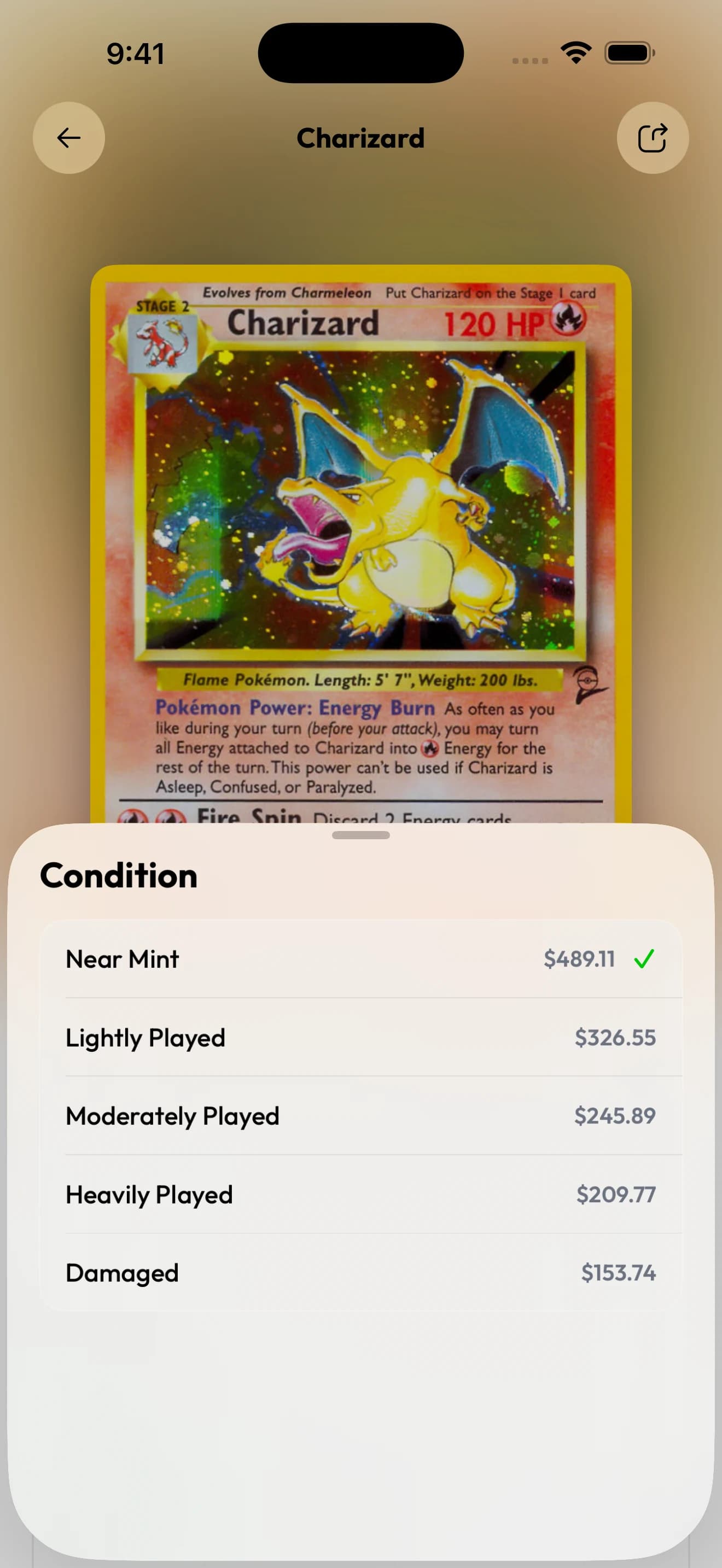
Inspect your physical card, then choose a matching condition. The clean catalog artwork is an identification reference, not a condition assessment of your copy.
Captured in Brickify on iPhone 17 Pro Max. Displayed values are examples from the capture, not current quotes.View full-size screenshot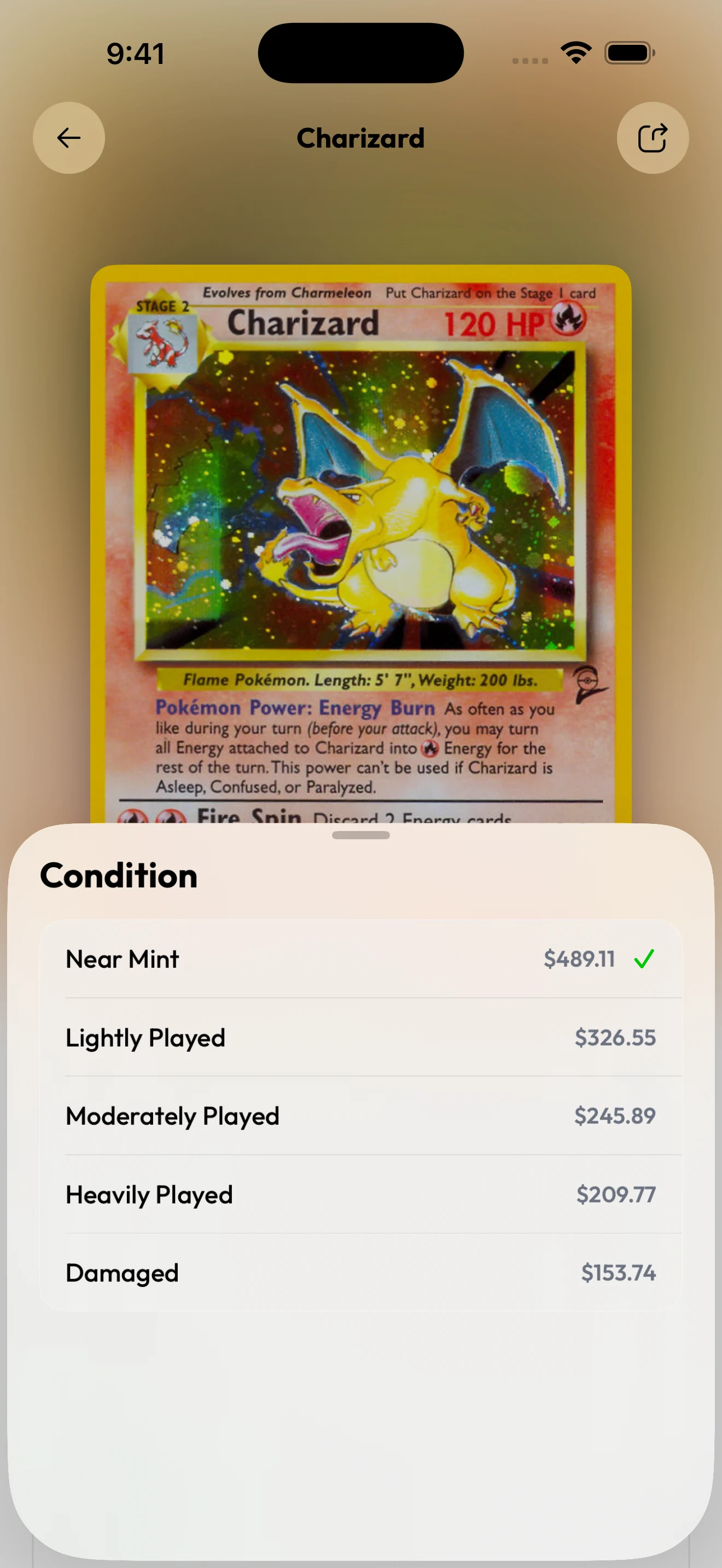
Common questions
Does Brickify grade my Pokémon card?
The raw and graded price comparison is not a professional grade. A displayed graded value does not certify your card’s condition or authenticity.
Are graded cards always worth more?
No. The result depends on the card, grade, demand and costs. Compare the actual version and realistic outcomes rather than assuming every submission adds value.
Sources & further reading
The app for your collection
Put your Pokémon collection in focus.
Scan your cards, check their estimated value, and keep your collection together with Brickify.
Free to download · iPhone, iPad & Android
Explore the Pokémon scannerEstimates are a reference, not guaranteed sale prices. Brickify is independent of the owners of the collectible brands mentioned here.