Collecting guides
How to Prepare Pokémon Cards for Sale with Brickify
Identify and organize Pokémon cards before selling. Check variants and condition, compare relevant values, and choose between singles and a clearly described lot.
Before selling Pokémon cards, build a checked inventory of the exact printings, quantities and condition. Use Brickify to identify cards and review available value estimates, then choose a selling format and calculate your expected proceeds after costs.
Identify the cards before setting a price
A familiar character or valuable-looking artwork is not enough to price a card. Confirm the set, collector number, language and finish. Scan a clear group with Brickify, then review each result and give uncertain cards an individual pass.
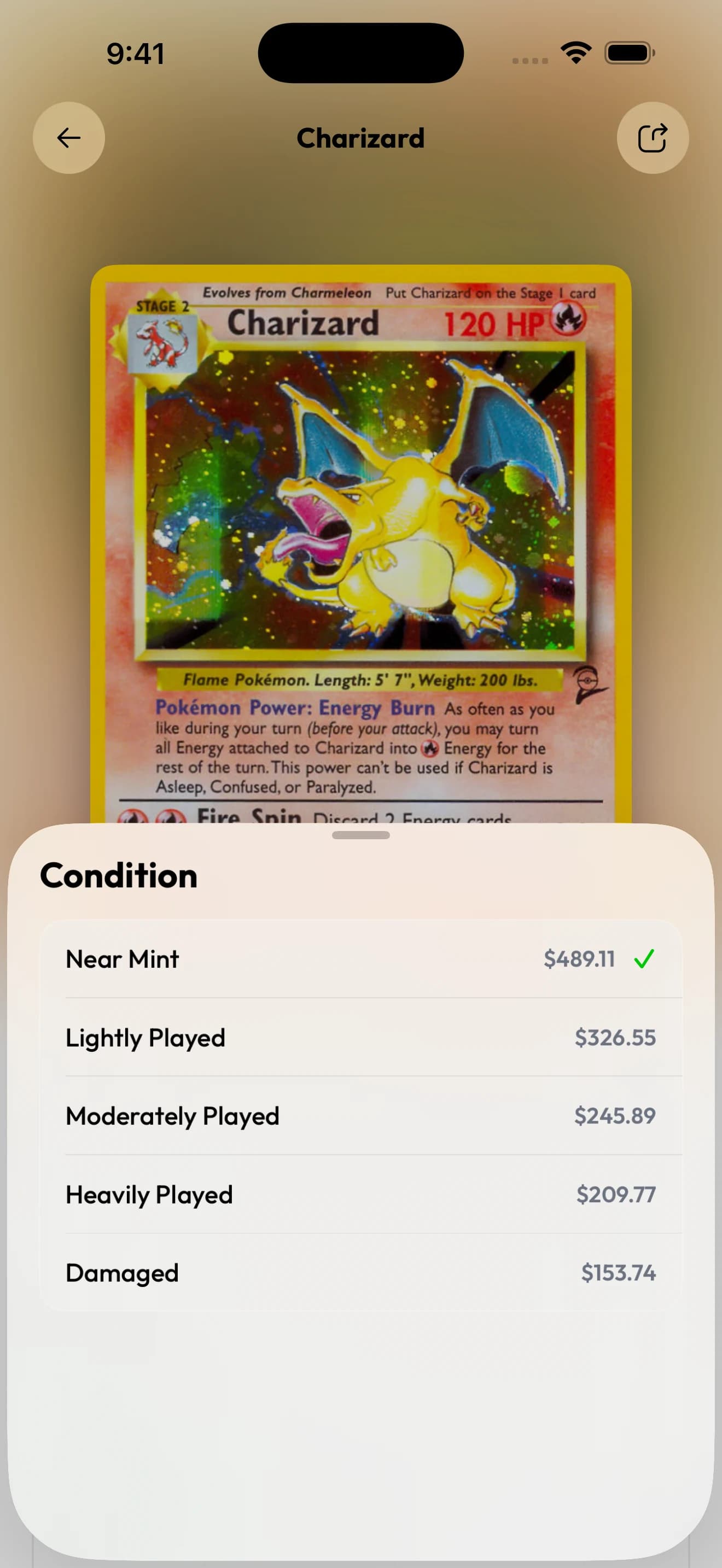
Inspect your physical card, then choose a matching condition. The clean catalog artwork is an identification reference, not a condition assessment of your copy.
Captured in Brickify on iPhone 17 Pro Max. Displayed values are examples from the capture, not current quotes.View full-size screenshot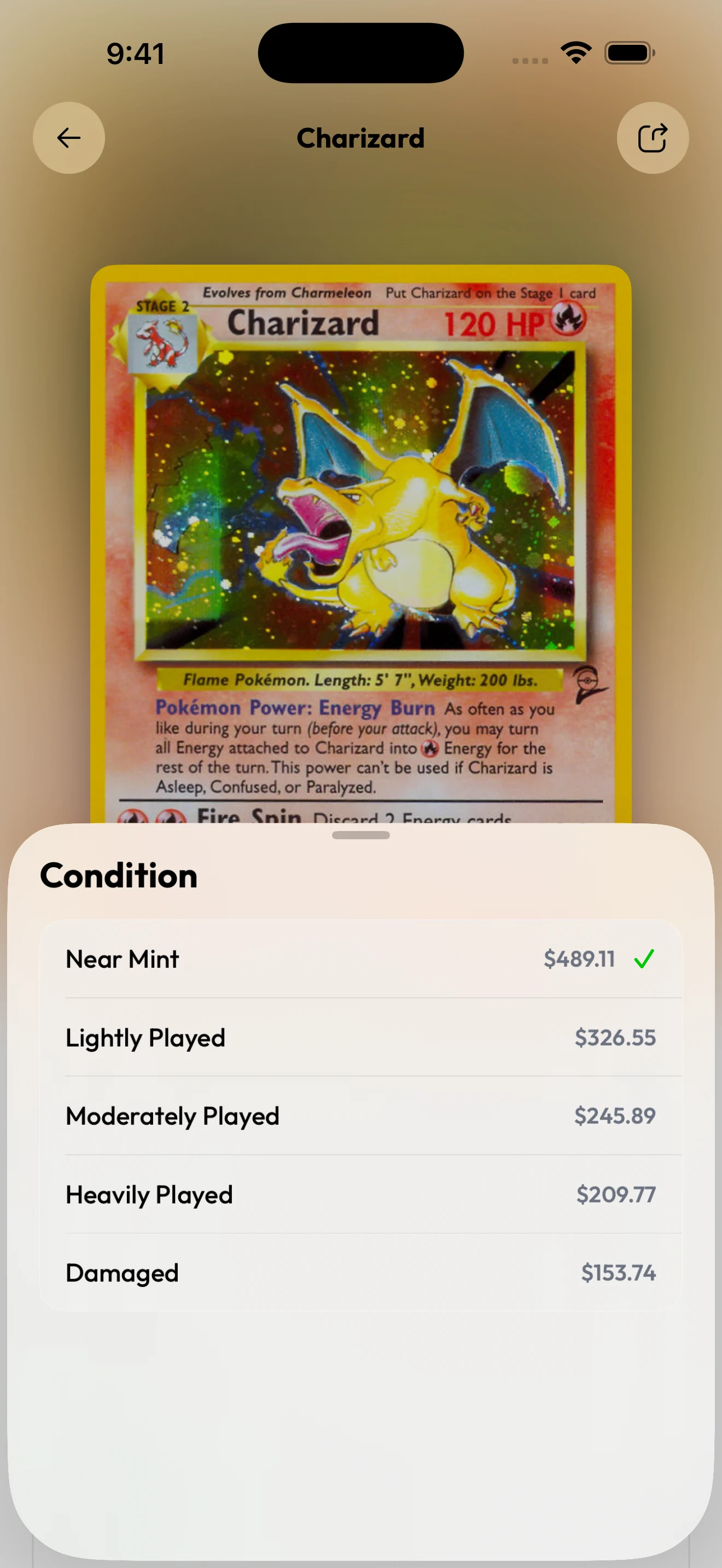
Describe the physical copies you will sell
Inspect both sides in good light. Photograph visible wear and keep the actual card separate from any catalog artwork you use as a reference. For several copies, check each one; they may not share the same condition.
- Record the exact printing and number of copies.
- Check corners, edges, surface and any creases.
- For a graded card, read the grading company, assigned grade and label details.
- Keep anything with unresolved authenticity questions out of a listing that presents it as genuine.
Use comparable values as a starting point
Review Brickify’s available estimates, then examine relevant recent sales when deciding on a price. Match the version and condition. Keep raw and graded comparisons separate, and distinguish asking prices from completed sales.
A sale that includes several cards, an unusual accessory or a different condition may not be a useful comparison. Missing pricing needs research; it is not evidence that a card has no value.
Choose singles or a lot around the work involved
| Format | Useful when | Work to account for |
|---|---|---|
| Individual cards | Useful whenA particular card has demand that justifies its own listing. | Work to account forSeparate photos, questions, packing and shipping. |
| A described group | Useful whenThe cards belong together or you want to sell them as one purchase. | Work to account forAn accurate count, clear description and a price for the group. |
| An in-person offer | Useful whenYou want to inspect terms and complete the transaction directly. | Work to account forCompare the offer with the convenience and effort saved. |
There is no universal threshold at which a card should be sold individually. Estimate the likely extra proceeds and decide whether they justify the extra time. Choose the marketplace or sale channel after checking its current fees, payment terms and protections.
Calculate what you expect to keep
Start with an expected selling price, then subtract the applicable platform costs, postage and packing. If you are considering grading first, include that service and shipping in a separate scenario. A higher headline sale price does not necessarily mean higher net proceeds.
Update the inventory after the sale
Adjust the sold quantity in your collection and keep a record of the transaction. Retain the listing photos and order details according to your selling needs. Keeping sold cards out of the current inventory makes the next collection estimate easier to trust.
Common questions
Should I grade all my cards before selling?
No. Evaluate the exact card, realistic grade outcomes, service costs and time involved. A graded estimate is not a guaranteed result for your ungraded card.
The app for your collection
Put your Pokémon collection in focus.
Scan your cards, check their estimated value, and keep your collection together with Brickify.
Free to download · iPhone, iPad & Android
Explore the Pokémon scannerEstimates are a reference, not guaranteed sale prices. Brickify is independent of the owners of the collectible brands mentioned here.