Collecting guides
How to Price a Pokémon Binder After Scanning It
Turn a scanned Pokémon binder into a useful value estimate. Verify variants, quantities and condition, then distinguish a collection total from a sale price.
Price a Pokémon binder by checking each card’s exact printing, quantity and condition, then adding comparable estimates. Brickify helps identify cards and track their estimated value; a complete binder’s selling price can differ from the sum of individual estimates.
Start with a complete, checked inventory
Scan one page at a time, then compare the result count with the cards in the page. Correct missing matches, duplicated captures and similar printings before calculating the total. A single expensive card matched to the wrong release can distort the whole binder estimate.
Separate the three numbers
| Number | What it means |
|---|---|
| Estimated collection value | A reference total based on the cards and quantities recorded. |
| Expected gross sale price | What you reasonably think a buyer might pay for the cards as offered. |
| Expected net proceeds | The sale price after relevant fees, postage and other selling costs. |
Do not subtract selling costs from the collection record itself just to make it look like a cash offer. Keep the estimate and the sale calculation separate so you can explain what each number represents.
Check the cards that drive the total
Review the most valuable-looking matches first. Verify their set, number, language, finish and physical condition. For important decisions, inspect recent comparable sales for the same version and condition; an asking price alone does not show what a buyer paid.
Treat missing pricing as a research task rather than a zero. Likewise, do not use a high graded estimate to value an ungraded card in a pocket. Use the matching price basis throughout the binder.
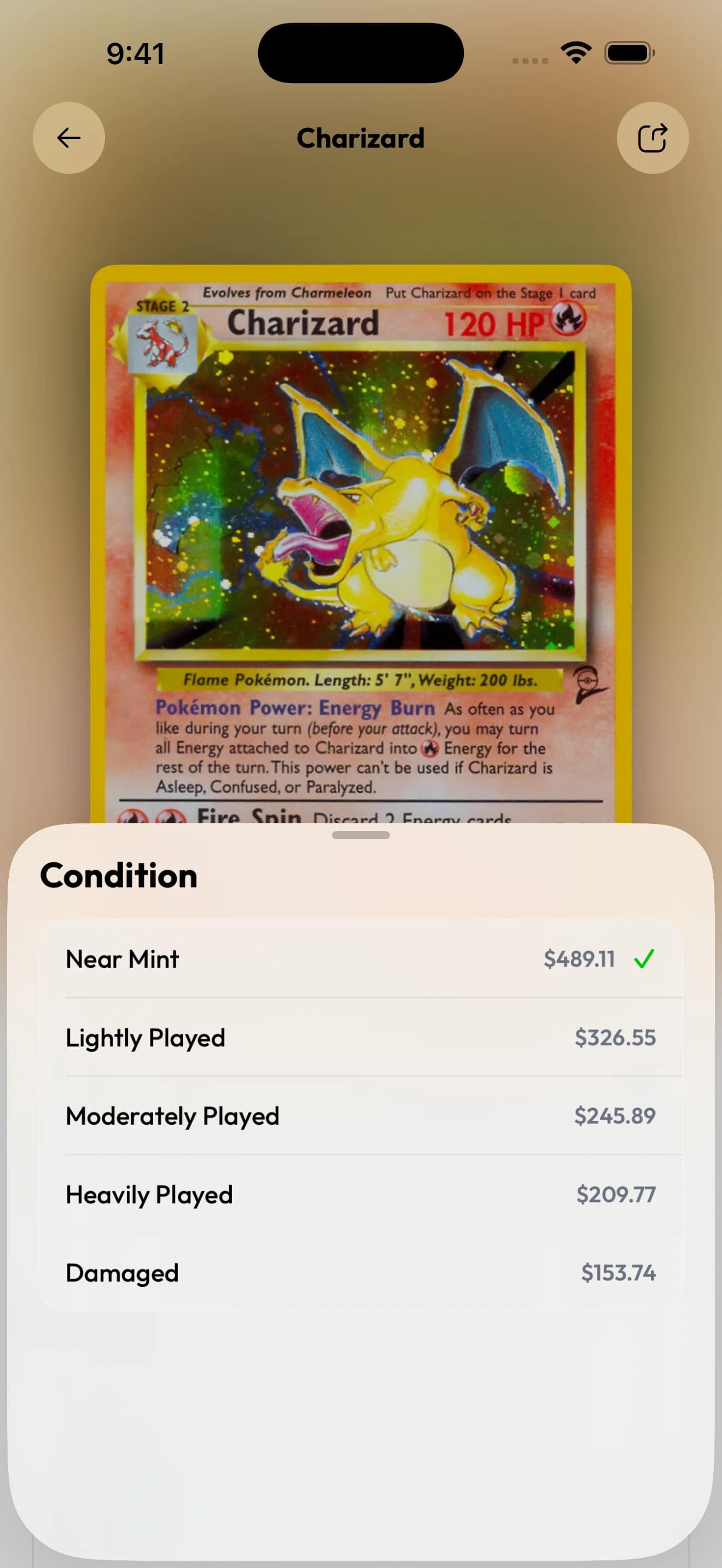
Inspect your physical card, then choose a matching condition. The clean catalog artwork is an identification reference, not a condition assessment of your copy.
Captured in Brickify on iPhone 17 Pro Max. Displayed values are examples from the capture, not current quotes.View full-size screenshot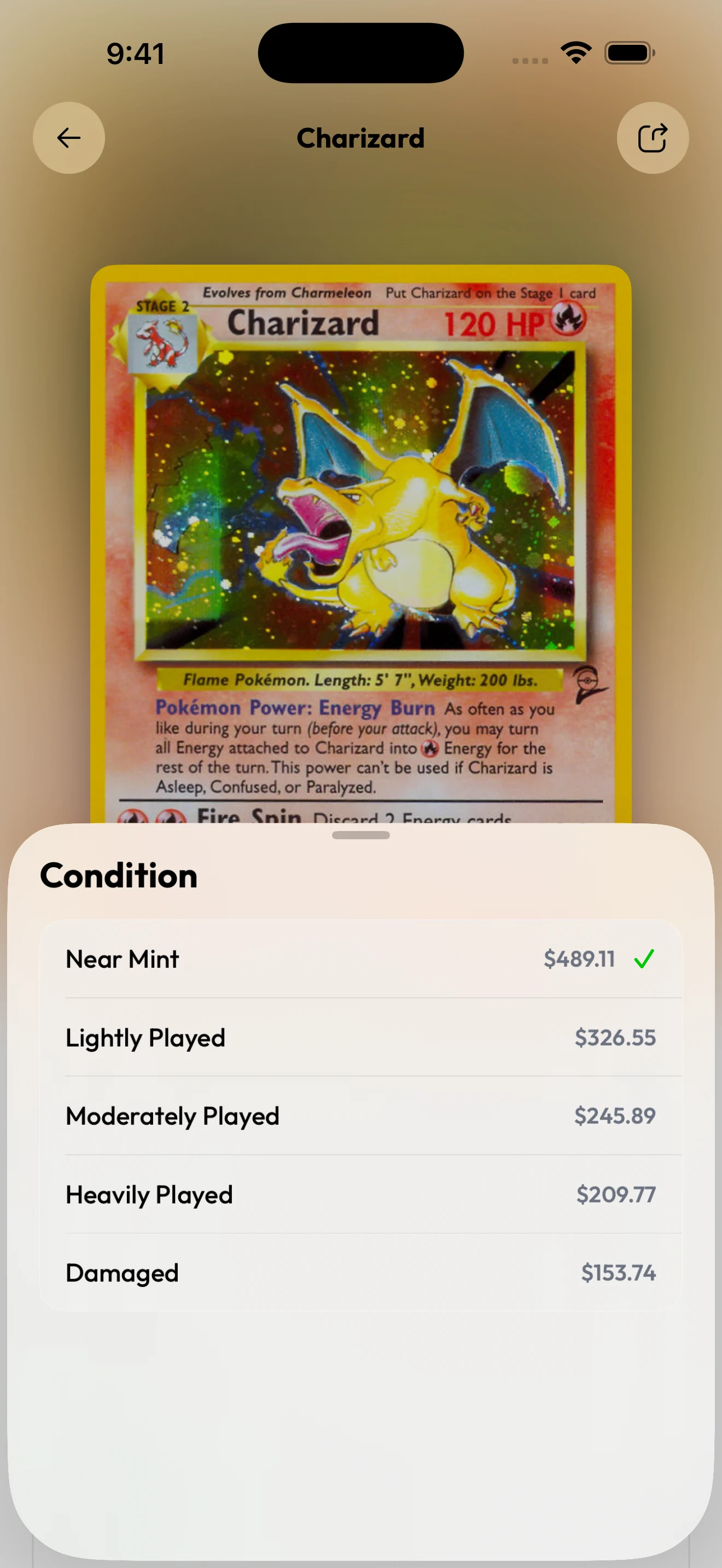
A worked example with illustrative numbers
| Cards in the binder | Reference estimate | Subtotal |
|---|---|---|
| 2 individual cards | Reference estimate$40 each | Subtotal$80 |
| 10 other cards | Reference estimate$3 each | Subtotal$30 |
| Remaining group | Reference estimate$10 for the group | Subtotal$10 |
| Total before any selling costs | Reference estimateIllustrative only | Subtotal$120 |
The $120 total is a hypothetical inventory reference, not a current price quote. A buyer purchasing everything at once may make a different offer from the sum of individual sales. Separately selling the two leading cards can also involve more listing, packaging and shipping work.
Decide whether to offer singles or a lot
Compare the likely extra proceeds from individual listings with the extra time and costs. A carefully described lot can suit a collection you want to move together. Individual listings can suit distinctive cards with enough demand to justify the effort. There is no universal dollar threshold that fits every seller.
Keep the record useful after the estimate
Date your valuation notes and keep the underlying card details. Update quantities after sales and revisit uncertain condition before listing. Brickify’s collection view gives you a place to follow your holdings while keeping the eventual sale decision separate.
Common questions
Can I price a Pokémon binder from one photo?
One photo may help identify visible cards, but a useful binder value requires all pages, confirmed matches, quantities and condition. Cards hidden behind other cards will not be visible.
Should I value every card as near mint?
No. Inspect the physical copies and use condition-appropriate comparisons. Clean catalog artwork does not describe wear on your own card.
Sources & further reading
The app for your collection
Put your Pokémon collection in focus.
Scan your cards, check their estimated value, and keep your collection together with Brickify.
Free to download · iPhone, iPad & Android
Explore the Pokémon scannerEstimates are a reference, not guaranteed sale prices. Brickify is independent of the owners of the collectible brands mentioned here.